On the page, this day looked as if it would be dead easy. There are just 14 km of trail between Nettersheim and Blankenheim. However, being of a stubborn nature, I wanted to do the whole of the Eifelsteig, which meant returning to the point where I left the trail the day before and following a long loop to return to Nettersheim just 400 metres from where I spent the night. By the time I finally left the village, which is admittedly pretty spread out, I was already up to 8 km! The Komoot recording for the day shows what I did pretty clearly, point A being the apartment where I had spent the night.

It was quite a cold morning, just 9° when I set off and so, for the first time, the shorts were packed away and I got out the hiking trousers. There was a chilly wind blowing, with a fairly cloudy sky, but just as I reached the Eifelsteig, the sun came out.
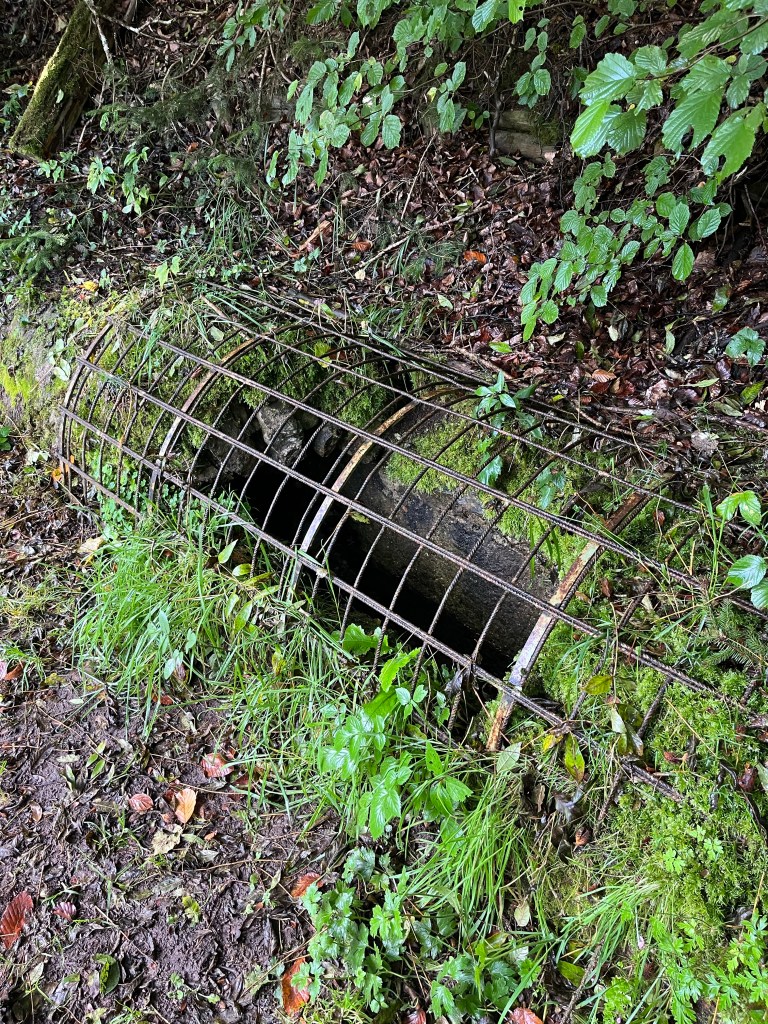
This first section was marked out by a series of information boards concerning the Roman Empire’s presence in the area. Parts of the trail were supposedly an old Roman road and, at one point, the channel built by the Romans to bring water from the local springs was clearly visible, if a little underwhelming.
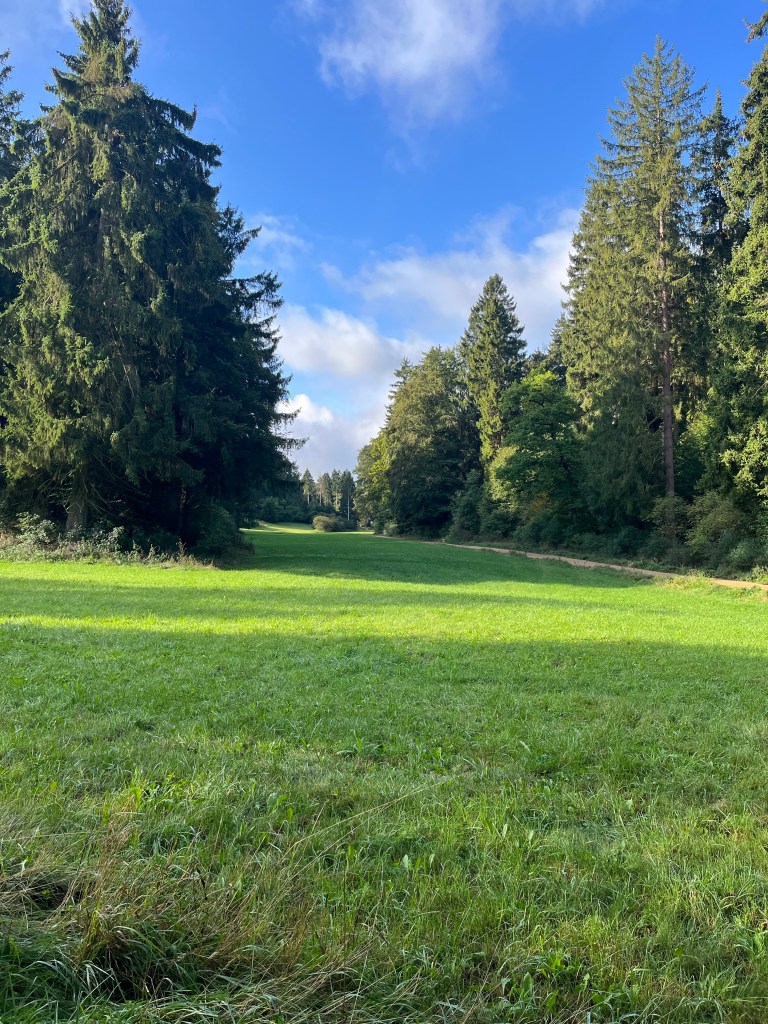
The walking was easy, with a brief climb from time to time, which would be the case for the whole day. After the discoveries of the previous days – Vogelsang and Steinfeld – there was nothing very remarkable about day 6, just very pleasant walking in beautiful countryside.
The trail skirted Nettersheim before finally descending to the town at an excellent café, where I picked up a double espresso. There, I met the two guys I had seen on and off since Kornelimünster. They told me that they had been able to sleep in Steinfeld although they didn’t specify if they had been at the abbey guesthouse. They were not doing the full trail, only going as far as Gerolstein, three days away. It looks like I am the only one around doing the Eifelsteig from start to finish.
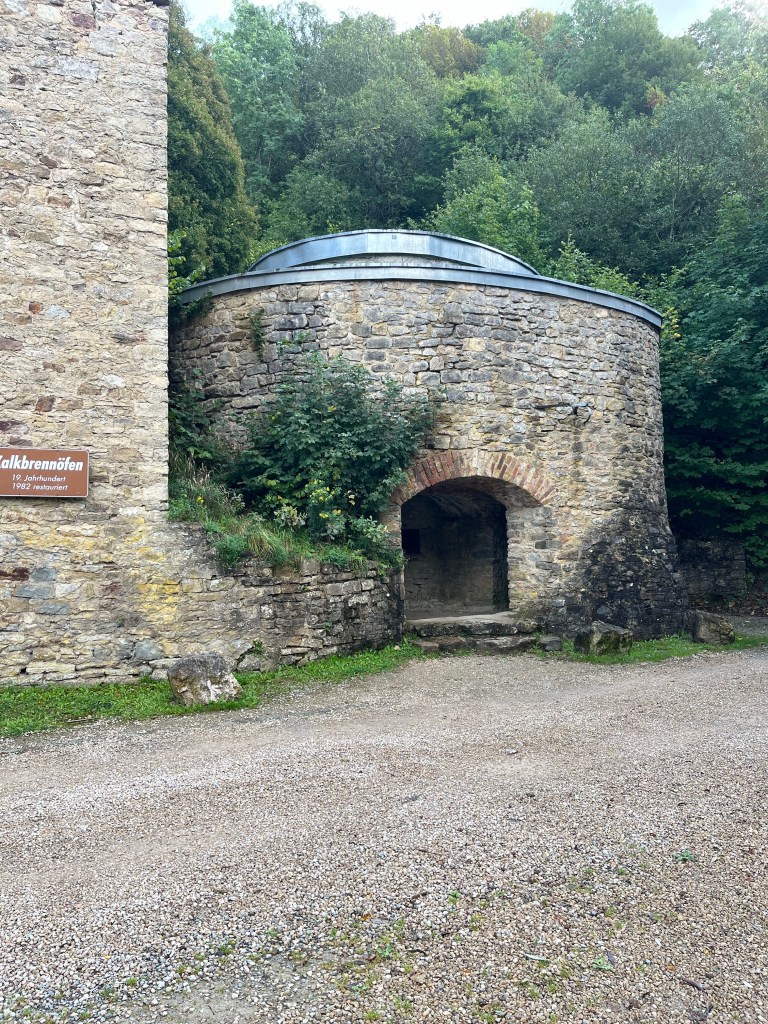
After crossing the railway track in Nettersheim (about 400 m from where I had spent the night, when I had walked 7 km by that point!), the trail began to follow the Urft river valley, passing an old lime kiln as it finally left the town.
Shortly after, the trail skirted a small lake…
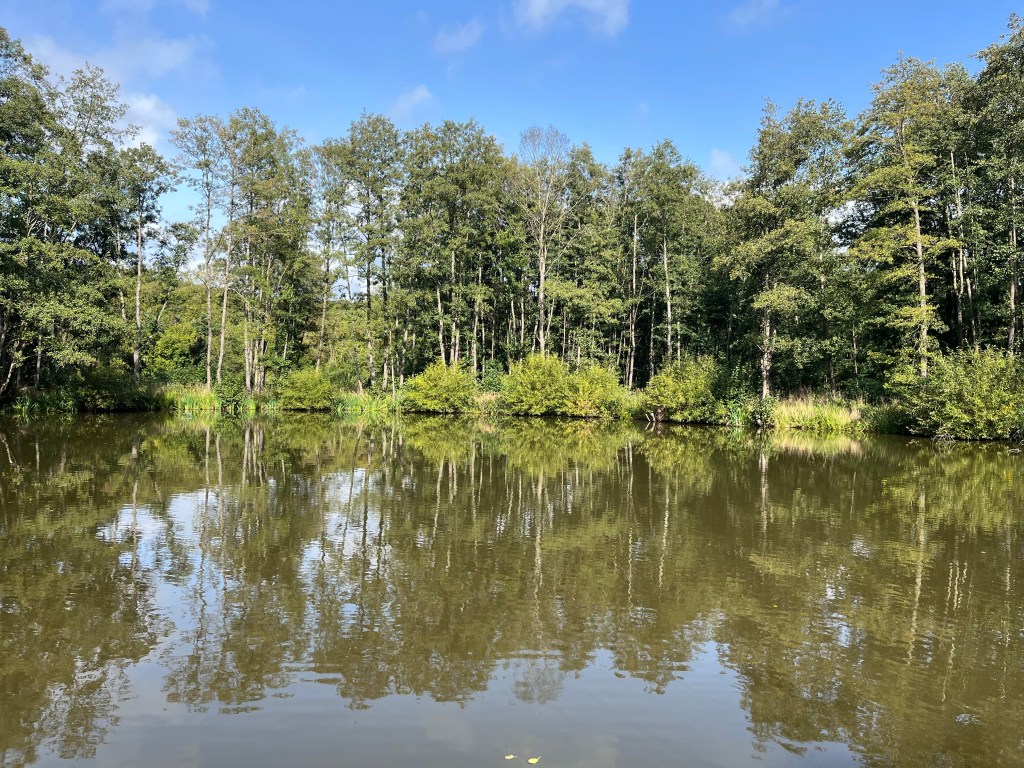
…as it continued to follow the river and the railway line on the opposite bank. After passing a small Roman fort, which was little more than four low walls in a meadow, the trail began to climb gently through woods and more open sections of farmland. In one of the wooded sections, I spotted a dark brown, almost black squirrel, similar to those I had seen on the Black Forest trails, a change from the red ones seen until now.

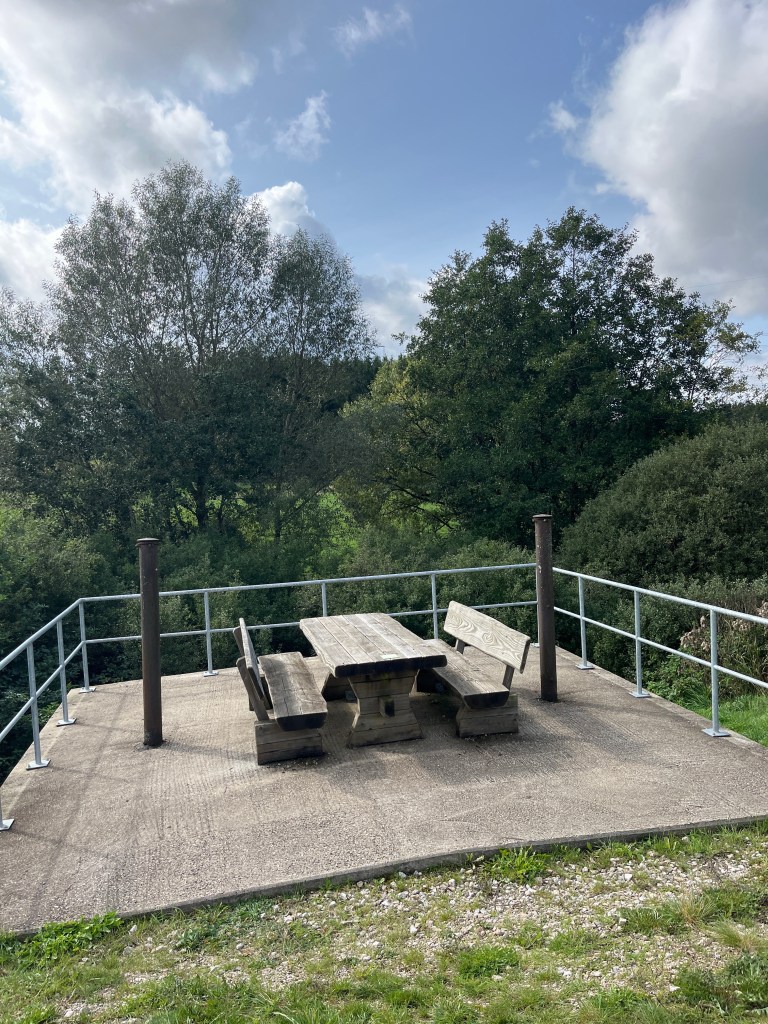
By this time, I was up to 12 km and decided it was time for a rest stop. I found the perfect spot, where I chatted for a while with the two guys seen earlier at the café before they moved on. It turned out that they were Dutch, from Limburg, the German-speaking area of the Netherlands. After they left, I took a leisurely break for about half an hour, basking in the sun that was finally taking the chill off the day.
As I carried on after my break, I realized that I was walking through the kind of terrain where I would be loath to walk at this time of year at home in France. The hunting season began a week or so ago, meaning that any hiking in the fields around our village is off the cards until next February. Every year in France a number of people are accidentally shot and killed by hunters. Such incidents make the headlines for a day or two, then are not mentioned until the next accident. With something like 1,300,000 hunters in France, the hunting vote is way too important for the government to attempt to settle the problem with stricter rules. I believe hunting is much more regulated in Germany, where only 300,000 people hunt, with strict training and regular checks. I have often hiked in Germany at this time of year and I have never seen or heard a hunter, yet game features regularly on restaurant menus. But every Sunday morning around our French village during the hunting season, shooting can be heard in the fields and woods. I definitely feel safer in Germany.
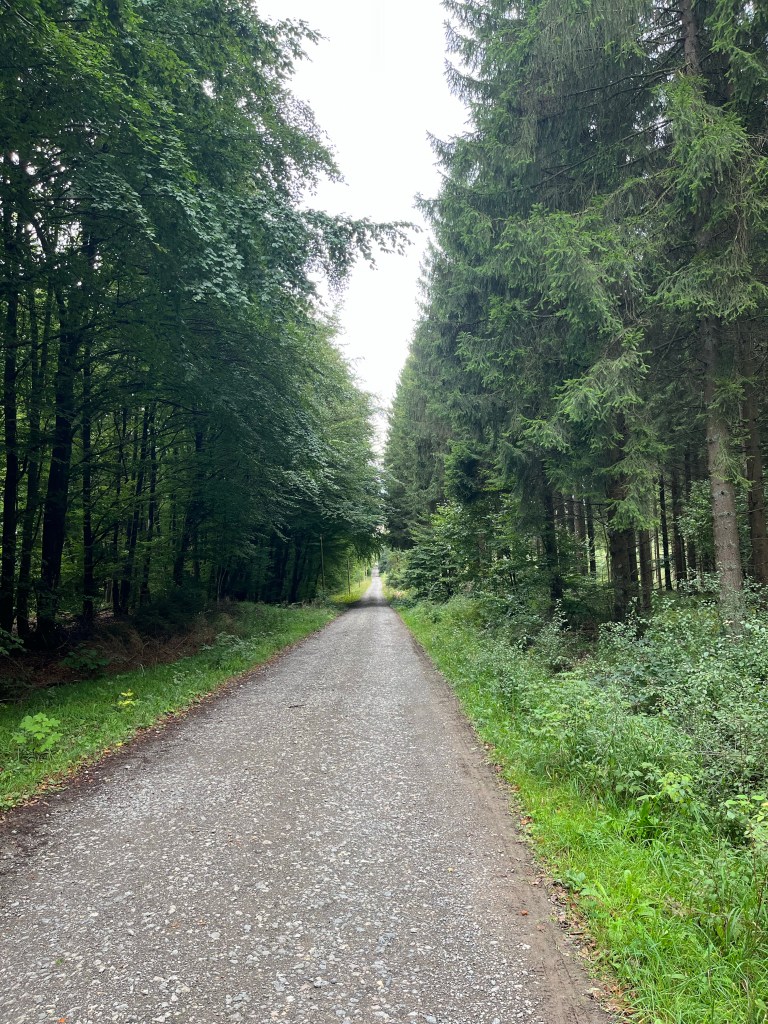
As I approached Blankenheim, there was one dead straight section of trail…

…after another…
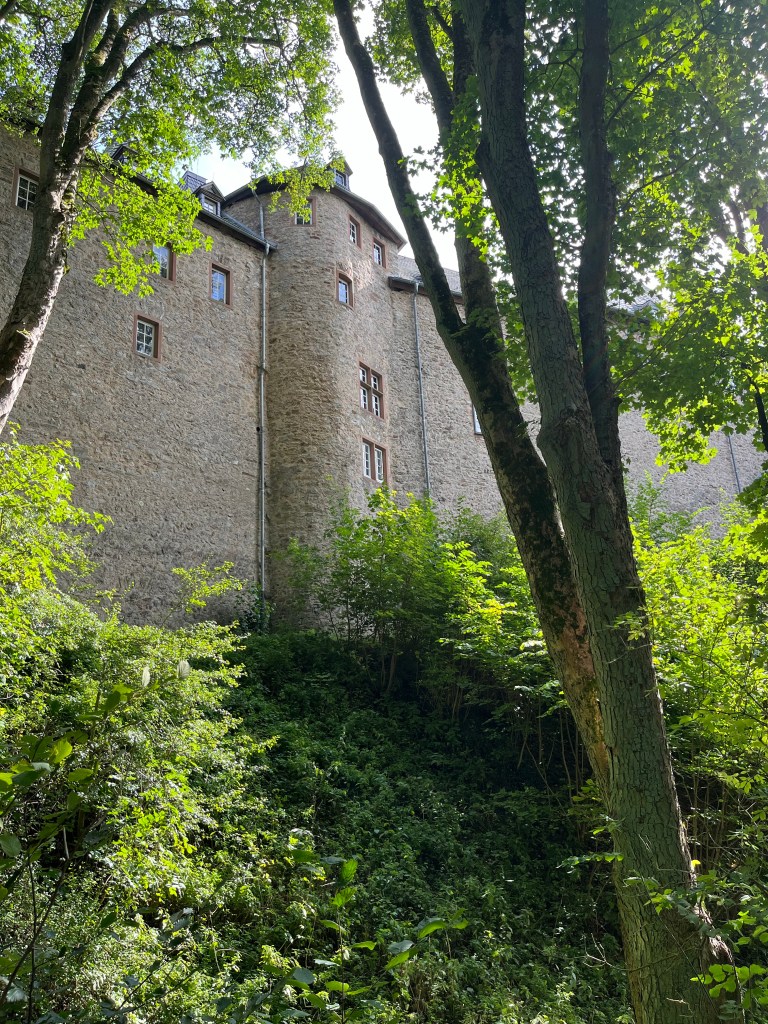
…and I was glad to finally reach the town, passing a number of archeological sites showing the system built in the 15th century to channel water in from the surrounding hills. The trail arrived high above the town, just next to the huge castle that is now a youth hostel (where I hadn’t been able to get a bed for the night).
Blankenheim was a pretty little place with some beautiful half-timbered buildings. Once again, I had booked a hotel outside the town up a hill but it wasn’t such a steep climb as in Gemünd. It was a simple, family-run place with a friendly owner who seemed surprised to have a German-speaking guest from France with a very English name! The room was huge and comfortable and, thanks to the local hunters, dinner was a delicious venison goulash with spaetzle and red cabbage. The perfect dinner to set me up for the next day when, once again, because of the lack of accommodation at the end of the stage, I would be walking at least 7 extra kilometres.
 Footsteps
Interesting to read your comments about the French hunting season. I hadn’t talked that it presented such a danger!
LikeLike
I think everyone in our village with a hunting licence has one eye gazing at heaven and the other staring into hell. Centuries of inbreeding do not make skilled hunters!
LikeLiked by 1 person