The same strong, cold wind was still blowing when I woke (the tail end of Storm Boris that was wreaking havoc in Eastern Europe?), but the skies were clear and it was going to be another fine day.
Apart from two fairly uninspiring sections – the first few kilometres out of Konz and a moment when the trail was near a motorway – this was a beautiful day of hiking in magnificent woods.
The trail out Konz followed fairly busy roads across a sort of industrial estate before reaching the bridge over the Moselle. From that point on, things began to look up.
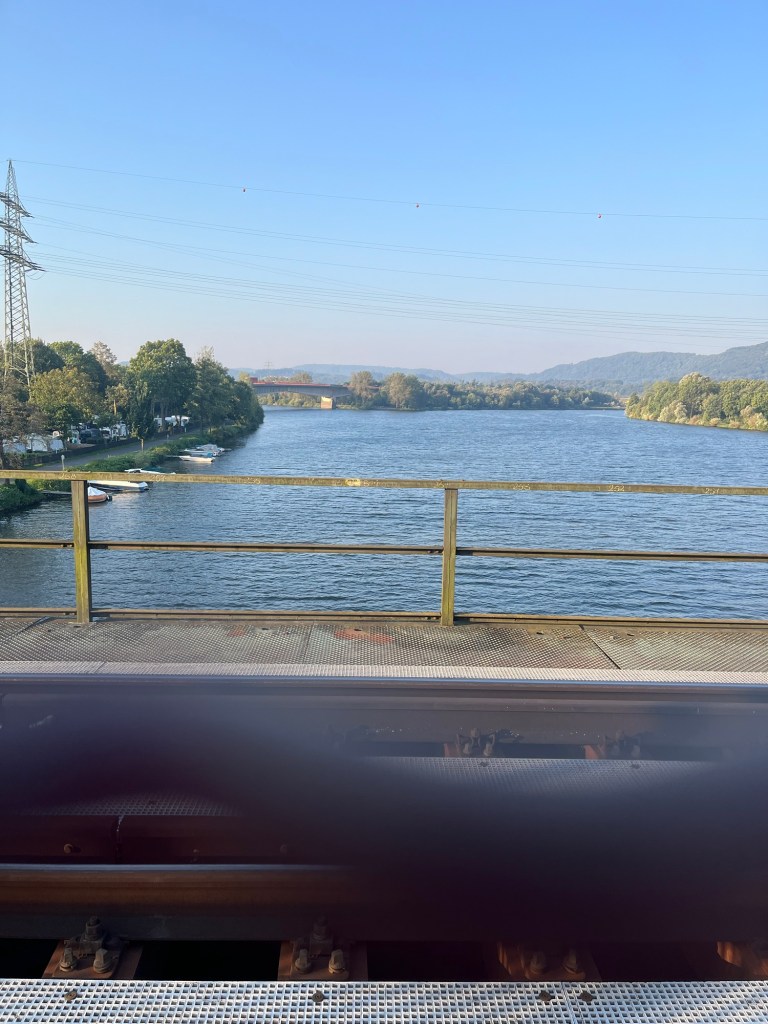
The terrain was perfectly flat for the first 4 kilometres or so, until the outskirts of the village of Zewen. There, the trail began to rise steeply with a series of flights of steps up the hillside. When I emerged from the last of them, it was time to take the jacket off despite the wind as more climbing lay ahead. I got talking to a lady jogger who stopped to ask me how far I was going. She told me that she had done sections of the Moselsteig, but never the whole trail all the way to Koblenz. I have come across this before in Germany, notably in the Black Forest where people often told me that they were hiking the trails in stages of two or three days over a period of months or even years. Through hikers remain very much a rarity, probably because people can’t take off so much time from work. I’m lucky in that September and October are the quietest time of year in my job, so I make the most of it.
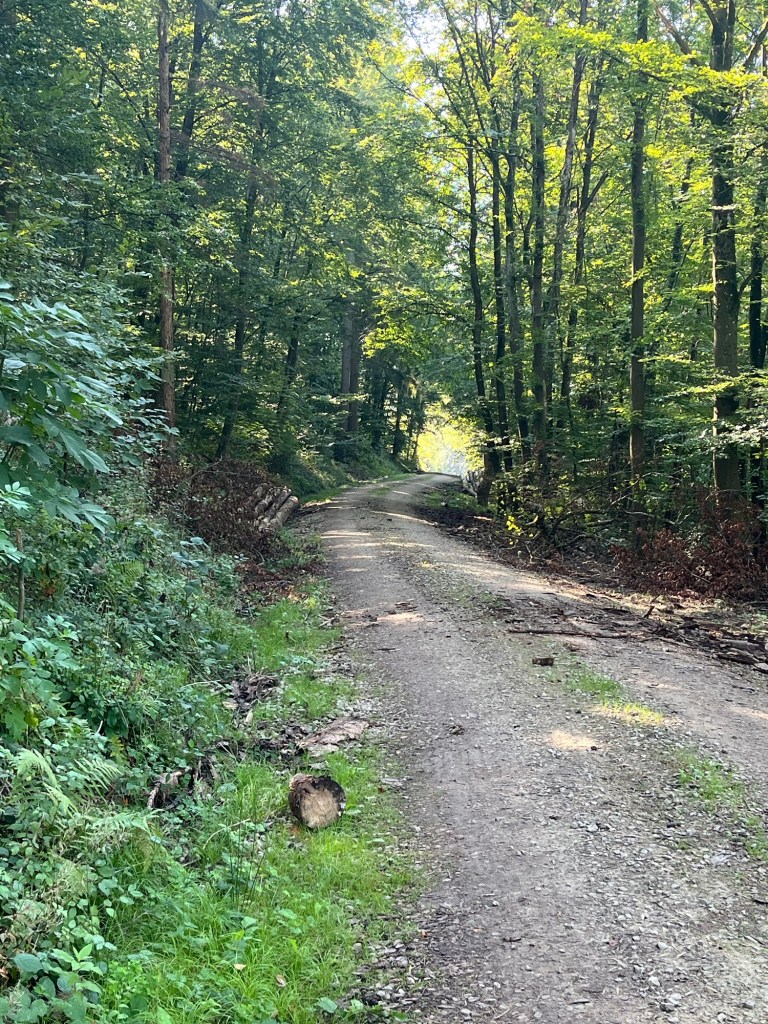
After I said goodbye to this lady, I set off uphill again, but on a track that was not so steep now, a more gentle rise through magnificent woods.
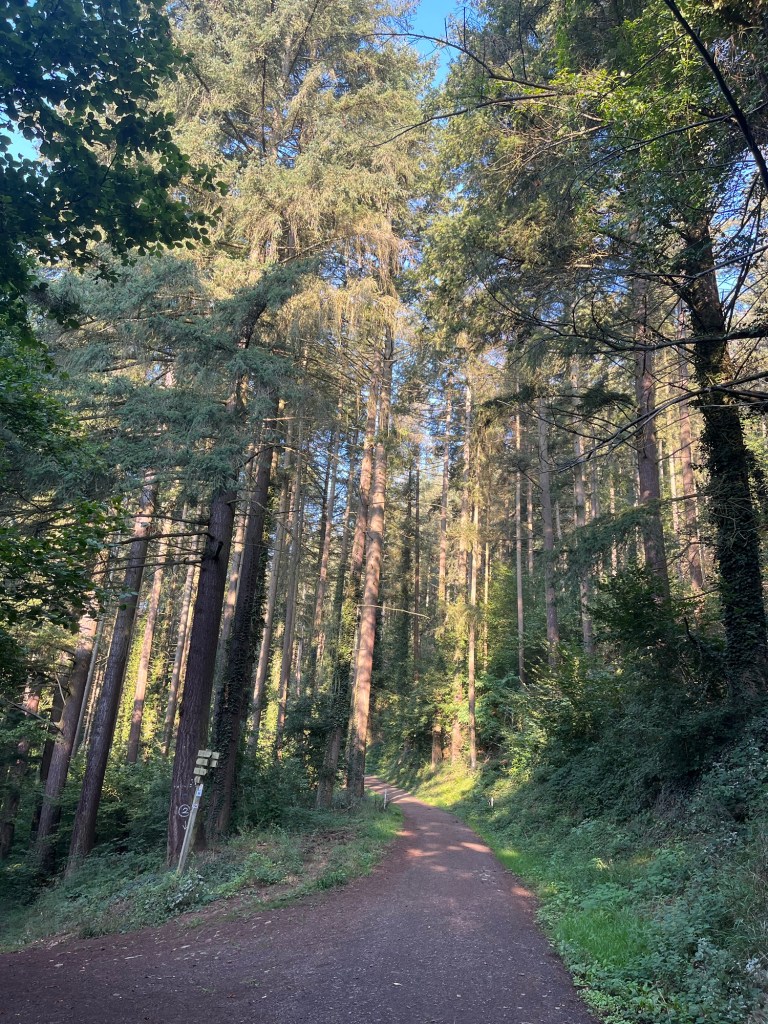
The track emerged from the woods above the small village of Herresthal that, surprisingly for these parts, did not seem to have a church. As I left the village behind, I began to hear a terrific din and thought that maybe there was construction work on the trail ahead. However, on rounding a corner, I saw the A64 autobahn below, with traffic reduced to a single lane in each direction while diggers and bulldozers were hard at work on the other half of it. The noise from the passing cars and the construction work was horrific, a brutal contrast with the silence of the woods a little earlier. There was one machine that sounded a horn every 30 seconds or so for God knows what reason and that made the experience of hiking this section of the trail even more unpleasant.
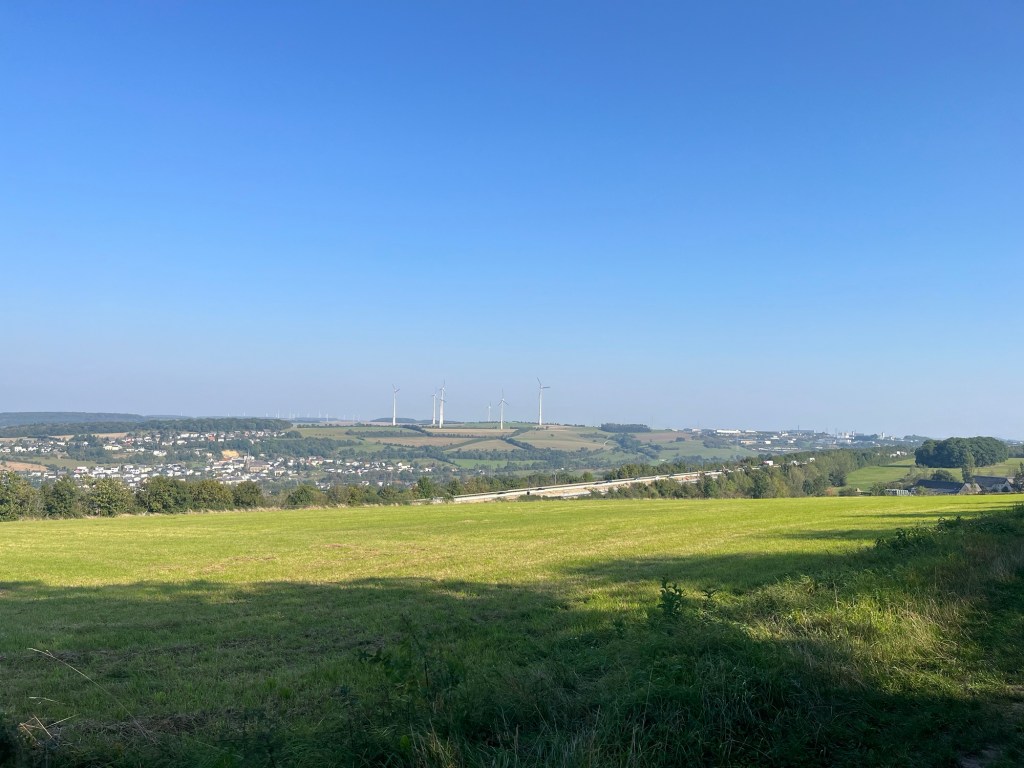
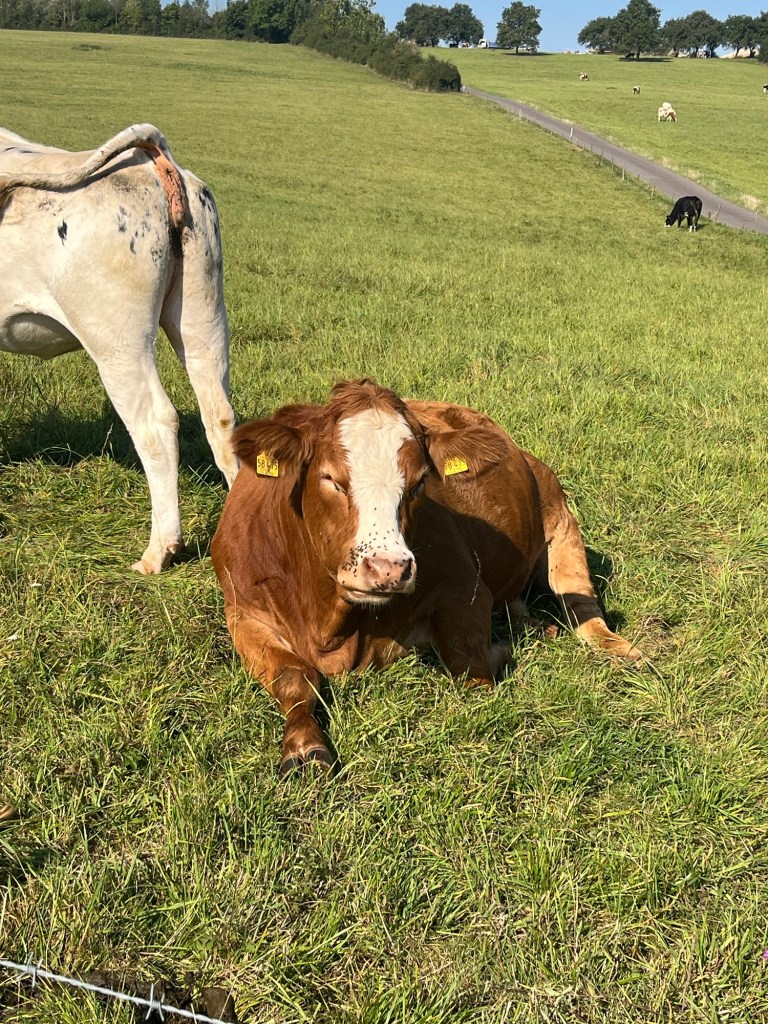
It was a huge relief when the trail finally veered away from all this construction work to descend to the woods again. Just as the trail turned, there was a field of very friendly and interested cows who were also being subjected to this horrific din, but, being cows, they seemed totally unfazed by it.
As soon as the trail entered the woods again, things became a lot more pleasant. Peace returned, and the trees provided plenty of shade from the sun that was gradually warming the air after a chilly start to the day.
At this point, it was barely midday, and if I had carried on at the same pace, I would have arrived way too early in Trier for my accommodation. On reaching the Cafe Mohrenkopf (only open weekends), I found a perfect spot to rest with a beautiful view of the valley below that I would be following to Trier. As I was sitting there taking in the view, a car parked behind me and a friendly German fellow told me that I had picked the perfect spot to rest. Just then, another hiker emerged from the trail up from the valley and the friendly German offered us both a boiled sweet (extra strong mint and eucalyptus). The other hiker moved on and I got chatting to the guy with the sweets. When I said that I found the trail and this part of Germany particularly beautiful, he was absolutely delighted, telling me that the locals are always moaning and saying things are better elsewhere. In fact, he was so pleased by what I said that he insisted on giving me two more sweets for the rest of the trail!
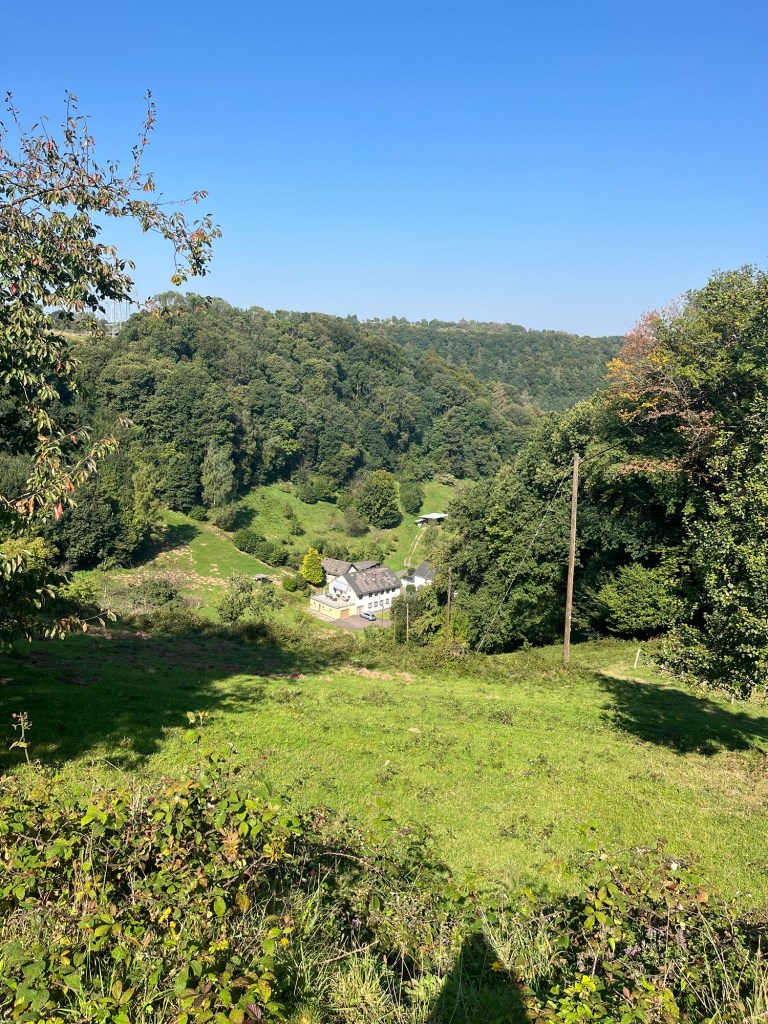
The trail descended fairly steeply for a short while from this rest stop before levelling out to follow the bottom of the valley. I was now in a blend of agricultural land (small fields) and woods, with the occasional orchard.
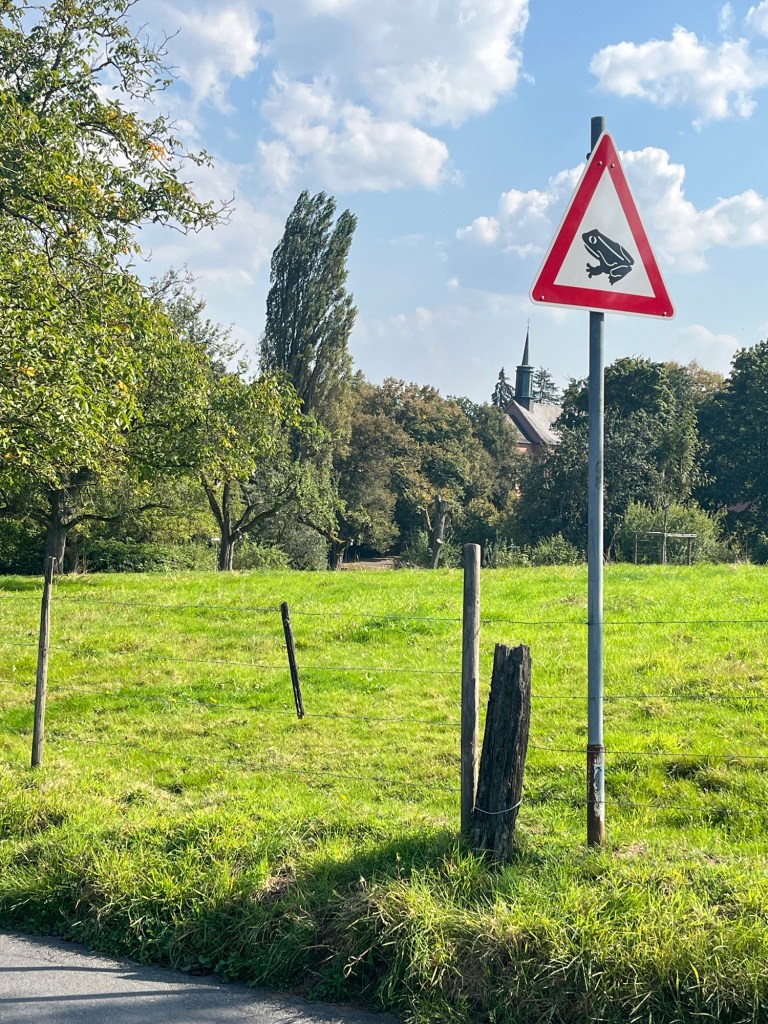
On crossing a country road, just before the first buildings on the outskirts of Trier, I saw another quirky road sign after the duck one two days before. I presume that large numbers of frogs or toads cross the road at certain times of year, as is the case in the Loing valley near home where protective barriers have been put in place for them.
On the final descent into Trier, the trail had been designed in such a way to spare hikers the worst of the heavy traffic by following a winding path through the Trier University campus. Even so, it was necessary to face the traffic at one point to cross the bridge into the city. However, once I was in within the city limits, the traffic was much lighter because, as with many German towns, the whole center of Trier is pedestrianized. As I wandered through the city, killing time before my scheduled arrival at my accommodation, I found a great Italian restaurant that served up delicious fig and pecorino ravioli (definitely something to try at home, given the glut of figs we have each year).
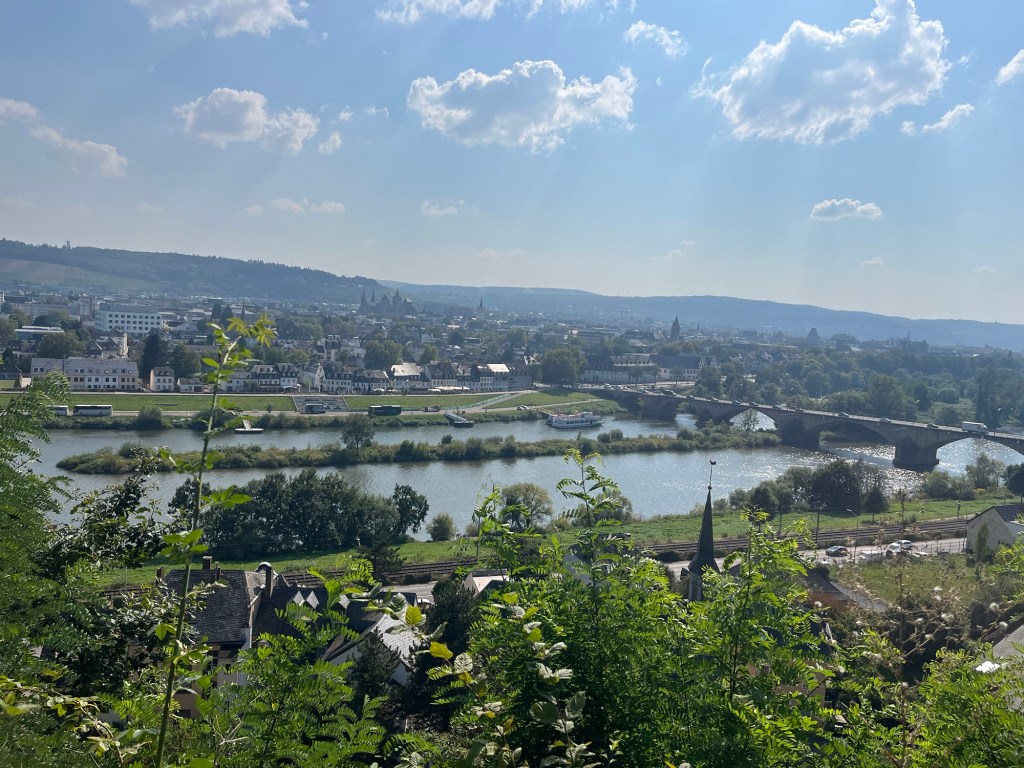
After checking in to my accommodation – a youth hostel in the city centre where I had a single room – I went for a walk around the city which I had previously seen at the end of the Eifelsteig the year before. That time, I had been unable to visit the cathedral because of a concert for German Reunification Day, so I was hoping to get inside at last. Unfortunately, it was closed to visitors as there was going to be another concert that evening and the musicians were rehearsing. So I suppose I shall just have to come back to Trier again to see the inside of the cathedral (not a bad idea as it’s a very pleasant city).
 Footsteps